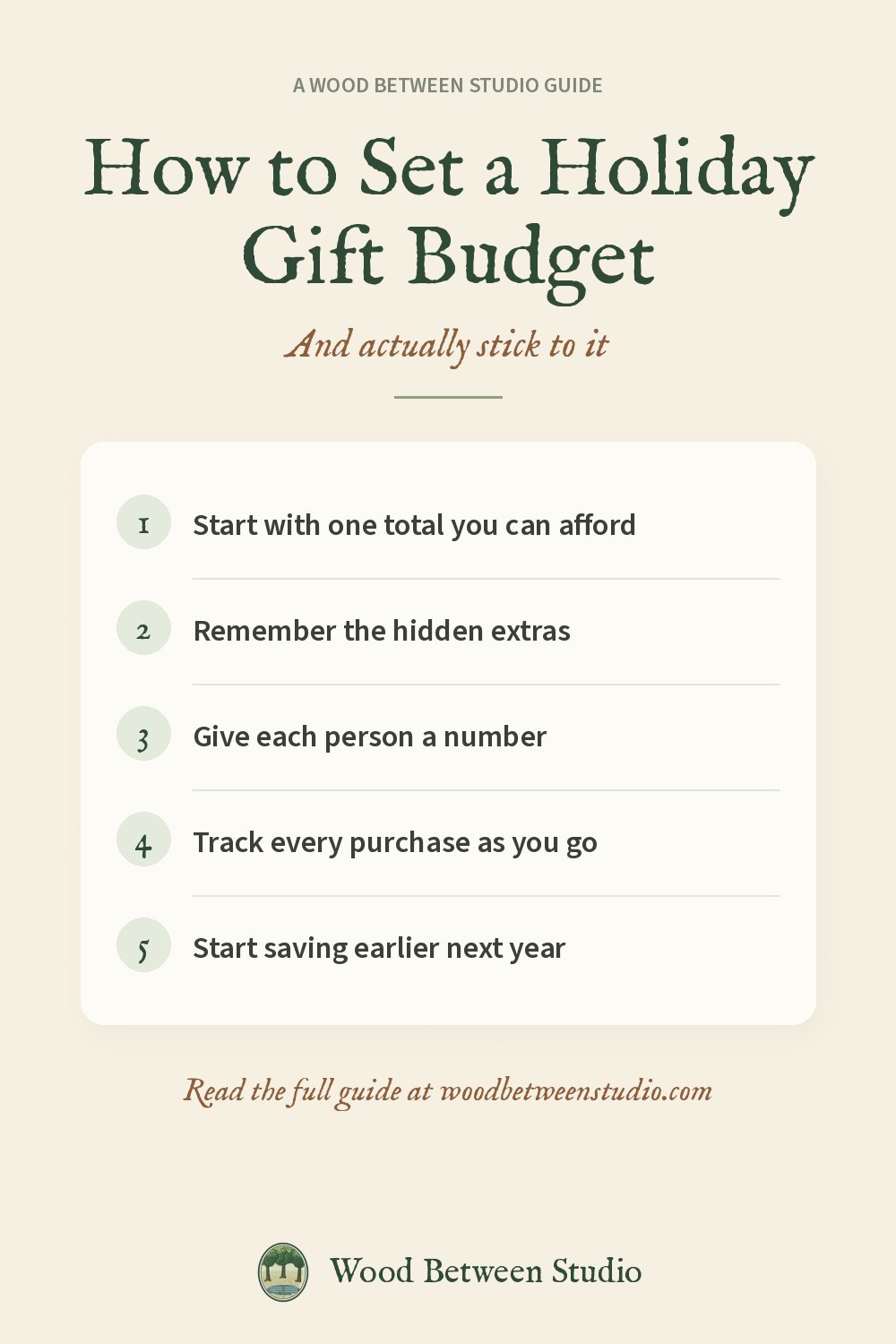
How to Set a Holiday Gift Budget (and Stick to It)
The holidays are meant to be generous, and they can be. But generosity without a plan often turns into a January credit card bill that takes months to pay off. A holiday gift budget lets you enjoy giving without that hangover.
Here's a simple way to set one, and a few habits that make it much easier to stick to.
Step 1: Start with one total you can afford
Begin with a single number for the whole season: gifts, food, decorations, cards, travel and everything else. Base it on what you can pay for with money you already have or will have before the bills arrive, not on what you spent last year or what feels expected.
To find that number:
- Check what's in your savings or holiday fund now.
- Look at what you can set aside from each paycheck between now and the holidays without shorting regular bills.
- Add those together. That's your realistic ceiling.
If the number feels small, that's useful to know now rather than in January. The steps below help you make it go further.
Step 2: Remember the hidden extras
Gifts are usually the biggest part of holiday spending, but they're rarely the only part. Before you divide your total, set aside money for the things that tend to sneak up:
- Holiday meals and hosting
- Decorations and a tree
- Cards and postage
- Wrapping paper, gift bags and tape
- Travel: gas, flights, a hotel or kennel
- Teacher, coworker and neighbor gifts
- Office parties, gift exchanges and charity drives
- Clothing for events
Here's how a simple $800 season might split. These numbers are only an example:
| Category | Amount |
|---|---|
| Gifts | $500 |
| Food and hosting | $150 |
| Decorations | $40 |
| Cards, postage and wrapping | $30 |
| Buffer for things you forgot | $80 |
| Total | $800 |
The buffer matters. Something always comes up, and having money set aside for it keeps one surprise from wrecking the whole plan.
Step 3: Make a list of everyone you're buying for
Write down every person you plan to give a gift to. Be thorough: family, friends, children's teachers, coaches, the neighbor who feeds your cat, the office gift exchange. A gift you forgot to plan for is the most common way to go over budget.
Then look at the list honestly. Are there people you could exchange cards with instead of gifts? Family members who might welcome a name draw (each person buys for one other) or a spending limit? Many people are relieved when someone suggests it first.
Step 4: Give each person a number
Now divide your gift budget among the people on your list. You might give closer family more and acquaintances less. Write the amount next to each name.
For example, with a $500 gift budget:
- Partner: $120
- Two children: $90 each
- Parents (shared gift): $70
- Sibling: $40
- Two friends: $25 each
- Teachers and neighbors: $40 in total
That adds up to $500. When the numbers are written down per person, it's much easier to say "that's a lovely sweater, but it's over Mom's amount" in the store.
Step 5: Plan gifts before you shop
Next to each name and amount, jot down a gift idea or two. Planning before you shop helps you avoid impulse buys, spot good prices ahead of time, and skip the panicked last-week shopping where budgets usually break.
Some ideas that tend to go further:
- Consumables: good coffee, a favorite snack, homemade baked goods
- Experiences: a meal out together, tickets, a day trip
- Time and skills: babysitting, a home-cooked dinner, help with a project
- One thoughtful gift instead of several small ones
Step 6: Track every purchase as you go
This is where most holiday budgets succeed or fail. Each time you buy something, write down what it was, who it's for and what it cost, and check it against that person's amount. Include shipping and taxes, which add up quickly online.
It also helps to track:
- Online orders: what's ordered, when it's expected, and the return deadline.
- Status: bought, wrapped, given. This avoids buying the same person two gifts because you forgot the first.
If you go over on one person, take it from someone else's amount or from the buffer, and write it down. Adjusting on purpose is fine; losing track is what causes trouble.
Step 7: Pay with money you have
Using cash, a debit card or a credit card you pay off in full keeps the holidays from following you into the new year. If you do use credit, keep a running total and set aside the matching amount in your checking account so the bill is already covered when it arrives.
Watch out for store financing and "buy now, pay later" offers. They can make it easy to spend more than your plan, and the payments often land in the leanest months of the year.
Step 8: Start next year's fund in January
The easiest holiday budget is the one you saved for all year. Once the season is over, look at what you actually spent, divide it by 12 and set that amount aside each month. That's a sinking fund, and our guide to sinking funds with examples explains how to set one up alongside your other planned expenses.
Even starting in the summer makes a difference: $600 saved over six months is $100 a month instead of $600 at once.
Tools that help
You can plan all of this on one sheet of paper with columns for name, budget, idea, spent and status.
If you'd like a structured way to save ahead, our Savings Goals & Sinking Funds Tracker shows how much to put aside each month for holiday gifts and up to 19 other planned expenses. To keep holiday spending in view alongside your regular bills, the Simple Monthly Budget & Bill Tracker has a Gifts & Giving category ready to use. And the free sample planner includes a printable monthly budget page you can use for November and December.
The short version
- Pick one total you can pay for without debt.
- Set aside money for the extras, plus a buffer.
- List everyone, and give each person a number.
- Plan gift ideas before you shop.
- Track every purchase, including shipping.
- Start saving for next year in January.
The aim isn't to spend as little as possible. It's to spend what you chose to spend, and to start the new year without a bill you didn't plan for.