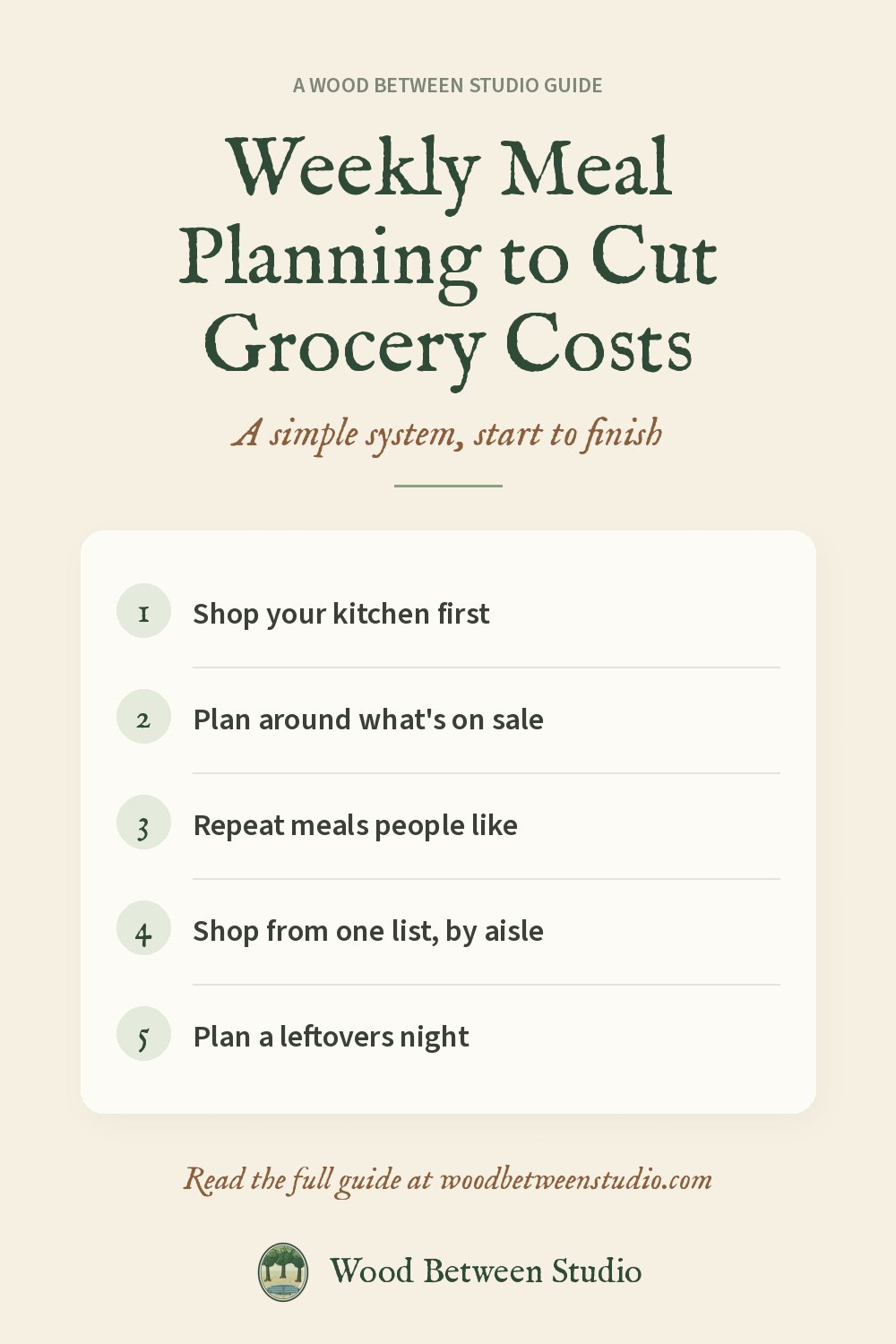
Weekly Meal Planning to Cut Grocery Costs: A Simple System
Groceries are one of the few big budget categories you can change week to week. Rent and insurance are fixed, but what you spend on food depends a lot on planning. The most common sources of overspending are familiar: extra trips to the store, buying things you already have, food that goes bad before it's eaten, and last-minute takeout when there's "nothing for dinner."
Weekly meal planning tackles all of these at once. Here's a simple routine that takes about thirty minutes a week once it becomes a habit.
Step 1: Set a weekly grocery budget
Start with a number. Look at what you spent on groceries over the last two or three months (your bank or card statements will show this) and divide by the number of weeks. That's your current weekly average.
Don't slash it dramatically on day one. Set this week's budget a little below your average and see how it goes. Small, steady reductions last longer than a drastic cut that leaves everyone hungry. If you don't yet have an overall budget, our guide on how to make a monthly budget that sticks can help you decide what's realistic.
Step 2: Shop your kitchen first
Before planning anything, look at what you already have. Open the fridge, freezer and pantry, and write down:
- Anything that needs using soon (vegetables, dairy, open packages, leftovers)
- Proteins in the freezer
- Pantry staples you have plenty of (rice, pasta, tins, beans, grains)
Then plan at least two or three meals around those items. This one step reduces waste and makes the shopping list shorter. It's also the step people most often skip.
Step 3: Check what's on sale
Look at your usual store's weekly flyer or app. If chicken thighs, a certain vegetable or a type of fish is discounted, build a meal or two around it. Planning around sales, rather than finding a recipe first and then buying whatever it needs, is one of the simplest ways to lower your bill.
Seasonal produce is often cheaper and tastes better, too.
Step 4: Plan the week's meals
Now fill in the week. A few habits make planning faster and cheaper:
- Plan dinners first. Dinner is usually the most expensive meal and the one most likely to turn into takeout. Breakfasts and lunches can often be simple repeats.
- Use a few themes. A loose structure, such as pasta on Monday, soup on Wednesday and something from the freezer on Friday, removes decision fatigue.
- Repeat meals people like. There's no rule that says every dinner must be new. A rotation of ten to fifteen reliable meals is a huge time-saver.
- Share ingredients across meals. If you're buying cilantro for tacos, plan a rice bowl later in the week that uses the rest. If you're roasting a chicken, plan for soup or sandwiches from what's left.
- Plan a leftovers night. Once a week, eat whatever's left. It saves a meal's worth of shopping and clears the fridge.
- Be honest about busy nights. If Thursday is always chaotic, plan something that takes fifteen minutes, or a freezer meal. A plan that ignores your real schedule leads to takeout.
Step 5: Write one list, sorted by store section
Go through each planned meal and write down every ingredient you don't already have. Then sort the list by store section: produce, dairy, meat, bakery, pantry, frozen and household.
A sorted list means one pass through the store, fewer detours down tempting aisles, and fewer forgotten items that lead to a second trip. Every extra trip to the store is an opportunity for unplanned spending.
Before you leave, take one last look at your list against the pantry, especially for staples like oil, eggs and onions.
Step 6: Shop once and stick to the list
A few simple rules help:
- Shop after eating, not when hungry.
- Compare unit prices (price per ounce or per item), which are usually printed on the shelf tag.
- Store brands are often a good place to save on staples.
- Buy in bulk only for things you use reliably and can store.
- If something isn't on the list, pause before adding it. Sometimes it's a genuine forgotten need, and sometimes it isn't.
Keep your receipt and write the total next to your weekly budget. Over a month, you'll see how your planning is affecting what you spend.
Step 7: Prep a little, if it helps
You don't need to spend Sunday afternoon cooking for the week. But twenty or thirty minutes of prep can make weeknight meals much easier: washing and chopping vegetables, cooking a pot of rice or grains, making a sauce, or portioning snacks. Prepped food is more likely to be eaten than forgotten.
Step 8: Keep what works
At the end of the week, note which meals were a hit, which were too much work, and what got thrown away. Add the hits to a "family favorites" list. Over time, this list becomes the backbone of your planning, and planning gets faster every week.
Reducing food waste
Food that's thrown away is money that's thrown away. A few habits help:
- Put new groceries behind older ones in the fridge.
- Freeze bread, meat and leftovers you won't eat within a few days.
- Keep a short "use first" list on the fridge.
- Plan meals with flexible ingredients (soups, stir-fries, frittatas and fried rice can use up almost anything).
Tools that make it easier
All of this works on the back of an envelope. A dedicated layout saves time, though, because the structure is already there each week.
The free sample planner includes a printable weekly meal plan with an "already have" list, a shopping list and a grocery budget line, so you can try this routine this week. If it suits you, our Meal Planner & Grocery List adds a grocery list sorted into nine store sections, a pantry and freezer inventory, a grocery budget and trip log, recipe pages and a family favorites list.
To see groceries alongside the rest of your spending, the Simple Monthly Budget & Bill Tracker shows budget against actual for each category, including food.
The weekly routine in brief
- Set a weekly grocery budget.
- Check the fridge, freezer and pantry.
- Look at what's on sale.
- Plan dinners first, with a leftovers night.
- Write one list, sorted by section.
- Shop once and record the total.
- Do a little prep.
- Keep the meals that worked.
Give it three or four weeks. The first week takes longer; after that, most people find it becomes a quick, almost automatic part of the weekend.